Wednesday, May 23, 2012

The Old Genre Fiction Puzzler


“Somewhere in its history,” Lev Grossman writes, “reading novels has gotten all tangled up with questions of social status, and accepting the kinds of pleasure that genre novels offer us has become — how perverse are we? — a source of shame” ( http://entertainment.time.com/2012/05/23/genre-fiction-is-disruptive-technology/ ). He produces this “gem” in the middle of an essay on the ways in which genre fiction acts disruptively towards modern literary fiction. And while what Grossman says is undeniably true, it also demonstrates a really frightening ignorance towards the origins of the novel.

“Somewhere in its history?” Try always. Try the prose romances written by women in the seventeenth century that were obviously not literature because they weren't poetry. Try Daniel Defoe and his uneasy relationship with “real-life” crime literature. Try Samuel Richardson and Henry Fielding sniping at one another about what, exactly, the novel was supposed to be.

It's this last that's particularly instructive. Both Richardson and Fielding were invested in inventing “the modern novel,” despite the fact that neither of them really did so. Richardson's novels were morally sententious, painfully realistic (to the degree that Pamela can be considered realistic, which is certainly arguable), and (sorry) boring. So really, if Grossman wants someone to point his finger at for the way we think of literary fiction: serious, stylistically ambitious, and coded with a kind of moral valence, it's Richardson who deserves to take the brunt of that blame.

Fielding, on the other hand, wrote in a tradition that was much closer to the romances that were the novel's true origins. His work had a picaresque, postmodernist quality. Nonetheless, casting him as a kind of anti-hero of the novel's development is stupid. He was just as invested as Richardson in making himself the “father of the novel” (which had so many forgotten mothers...), and therefore in codifying literary genre.

What does this mean for the novel today? It means that we are still doing what we always do. We always want to ask ourselves, “But is it art?” Maybe that's not a bad question. Grossman lists authors like Neil Gaiman, China Mieville, and Catherynne Valente to demonstrate that art abounds in the genre fiction ghetto. And I'm not inclined to disagree. Novels like American Gods or Deathless are art, whether they are slapped with a genre fiction label or not.

But I do see a difference between literary and genre fiction. Practically, there's a difference in the ways these things are produced and sold. There's no MFA mill for genre fiction writers, which means that their understanding of conventions and the creative process is distinctively different from that of literary fiction writers.

For the reader, however, I believe the main distinction is one of investment. A reader who picks up a mystery, a sci fi romp, a romance, has different expectations than a reader of literary fiction. They aren't preparing themselves to seriously engage with the prose in order to appreciate it, they're preparing for the payoff. If the payoff takes too long, they put the book down.

And literary fiction could absolutely benefit from a stronger “philosophy of the payoff.” Too many modern writers seem to feel they need to beat the audience with sticks and leave them bleeding in order to demonstrate their “seriousness.” But there's still a value to something that makes readers sit down and suspend their desire for immediate gratification and comprehension. There's value to a novel that demands study.*

And, finally, I think that Grossman's article demands a greater transparency. The reader has a right to ask whether he is responding to the reception of his literary works, which could perhaps best be classified as fantasy fiction, and demanding a larger share of the “art” pie. Merely excising the personal from the critical does not in itself equate distance. Grossman should be open and honest about what the stakes are here for him personally.


*Please don't point me towards the Tolkien scholars. The fact that a thing can be studied does not mean it needs to be studied.


Friday, May 11, 2012

Why I Will Never Be Cool

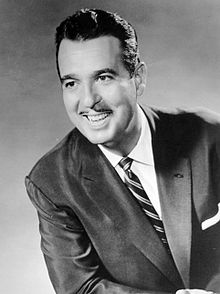
Tennessee Ernie Ford

I was not a popular child. That's the only real explanation I can come up with for my musical tastes. I liked Madonna as a child, and Oingo Boingo, but by fifth grade I didn't even know which New Kid on the Block was which. In junior high, I pretended to like Boyz 2 Men, but realistically, I spent most of my time at home, where my mother's boyfriend was playing his Johnny Horton records.

Thus an unusual ear was formed. Most popular music slid right off it, but a song like Bobbie Gentry's “Ode to Billie Joe” had me mesmerized for days. The positive effect of this is that I can out-hipster the hipsters. I dug into the history of popular music with idiosyncratic and insatiable appetite. There's always something new out there to find, you just have to hear it at the right time. I listened to Tom Waits and Leonard Cohen and the fucking Carter family and Dylan and Joni Mitchell. But the list doesn't stop there. Because there's John Denver too, and Glenn Campbell and Conway Twitty and Vera Lynn and everybody you wouldn't be caught dead listening to.

This is why I will never be cool.

Coolness is primarily humanist in perspective, which is to say it has to do with canon-making. It's cool to like old music so long as it's not music your grandmother liked. She was never hip enough to dig Chuck Berry.

I don't care if my grandmother liked it. I don't care if nobody but my grandmother liked it. I will listen to blues, to funk, to country hits that they sell on tv, to folk rock, to novelty music. I will listen to Harry Chapin singing about the “wild man wizard” inside of him when he gets high. And not for the pleasure of being different, because I mainly hide these tastes like leprosy.

With all that said? Led Zeppelin still sucks. I guess it must be music for cool people.


Saturday, May 5, 2012

A Tale of Two Cooks

My mother is a very good cook.  In terms of technical know-how and reliability, her cooking expertise far exceeds my own.  On her watch, everything gets cooked correctly.

So why do I hate her cooking?  The answer is simple: style and preparation.  My mother primarily relies on the same recipes she's been using for thirty years.  Do you remember what American cuisine was like thirty years ago?  That was the era when frozen vegetables were "fancy" for most people, and fresh vegetables virtually unheard of.  The majority of her meals involve an enormous slab of meat.

Personally, I am not a good cook.  I'm terrible at frying things.  I'm an indifferent baker.  Yet I like my own cooking better than anyone else's, and the reasons are the same I cited above: style and preparation.  I like to peruse recipes for inspiration.  A lot of my specialties are very simple and simply cooked foods that, in combination, become something more.  Example:  One of my favorite breakfasts involves sliced Spanish chorizo, chickpeas, tomatoes, and torn parsley all tossed together in a skillet.  It's an idiot proof dish--anyone with minimal cooking skills could prepare it.  But the dish itself has a taste that's to die for.

My point here is not that technical skill in the kitchen isn't important!  And with practice and attention to detail, anyone can overcome natural deficiencies in skill.  My point is, rather, that taking the time to assemble a meal--with main dish and sides that harmonize or a fantastically pulled-together single dish--can work wonders, and you don't have to have a lot of skill to do it.

So experiment.  Find out what foods go together, what you like, and don't be afraid to take things to the next level with a dash of freshly grated cheese, green herbs, or chopped nuts.  Little things like that have a big impact on a meal, and they're delightfully easy.

Friday, March 23, 2012

Befriending Tchaikovsky

Artist Jane Mackay's representation of Tchaikovsky's Romeo and Juliet


At some age in my youth, probably around fourteen when I first took music appreciation in school, I decided it was cool to hate Tchaikovsky (and Beethoven, Schubert, etc. etc.). I thought that the best music was plainly baroque in origins, with exceptions for Mozart. Formally elegant, intellectual pieces seemed to me far better than music that was overly emotional or “pretty.” I listened to a great deal of Bach.

This is not to say that I shunned everything after Mozart. I had a grudging little love affair with Debussy that I couldn't shake. But for a good fifteen years, that's more or less what I would have said had anyone questioned me on issues of classical music.

But recently, I've begun befriending musicians I once dubbed uncool. Schubert may have been the first because I wanted to listen to some lieder. And then it was the Tchaikovsky. Seriously, can you name another classical musician who's had such a hold on the mental “ear” of the public? (Okay, Beethoven, pipe down.) At least a dozen of his melodies are instantly recognizable to any adult and most children, from the Nutcracker Suite to the Sleeping Beauty Waltz.

This music isn't “just” for ballets and stage-work. It's dreamy, disciplined work that sounds positively opulent to the ear. It's a genuine pleasure to listen to the swelling strings he uses. And really, if I'm going to make any pretensions at all to coolness, I don't want it to be through rejecting something beautiful.

Tuesday, March 20, 2012

Outstanding and Outdated: Beef Tea

1900 Bovril advertisement, per the Victoria and Albert Museum

This post represents what I hope will be an ongoing series called Outstanding and Outdated, an idiosyncratic history of drinks. Please feel free to suggest drinks you'd like to hear about!

Upon eating some delicious beef stew tonight, I was recalled to some experiments I had once made in preparing beef tea. The ubiquitous Victorian food of invalids had long piqued my curiosity. So I bravely took lots of beef and double-boiled it and found it fairly bland and uninspiring.

In terms of cook books, beef tea seems to first appear in 1861's Book of Household Management. There Mrs. Beeton explains that the tea is “to be administered to those invalid to whom flavoring and seasonings are not allowed” (unlucky people!).

In 1870, Napoleon III ordered beef to feed his troops, and a Scotsman created Johnston's Fluid Beef, later called Bovril. This was and is the most popular commercial beef tea in production and it remains an iconic part of British culinary heritage today.

The New York Times in 1880 apparently had so many inquiries that related to beef tea that they decided to devote a special column to the matter. There we read that beef tea is entirely composed of gelatine and that humans cannot derive sustenance from gelatine. The author instead recommended taking some commercial beef tea and then adding to it meat and water to make...homemade beef tea.

Beef tea, which is nowadays pretty much exclusively Bovril, has strong associations with British football culture, as a beverage for fans to enjoy on a cold morning in the stands. It has mainly lost its early associations with invalidism and is nowadays made at home only by anachronistic food enthusiasts like myself.

You can find Mrs Beeton's recipe here.

Sunday, March 18, 2012

Snow Day Reading


I realize this post is fairly unseasonable for most readers, but here in the mountains, we've had snow coming down hard for a night and a day now, which inspired me to pick out the perfect books for a snow day.

Let me be very clear—snow day reading is all about comfort. For this reason, about half of my choices are basically children's literature. These are the easy-to-reread favorites that are easily picked up with a cup of tea and put down for a long nap under a quilt. 

The Long Winter by Laura Ingalls Wilder--Laura and her family may be barely surviving a hard winter, but you're cuddled up with a cup of cocoa! Enjoy the vicarious hardship.
Deathless by Catherynne Valente--An exquisite novel that reimagines Russian folk tales in the era of Communism. Warning: may cause beet-cravings.
The Lion, the Witch, and the Wardrobe by C. S. Lewis--The archetypal snow day book. Look out your window and imagine that every snow-covered lamp post is magical.
The Snow Queen by Hans Christian Andersen--This fairy tale is immensely influential and strangely underappreciated. Anderson is the master of the literary fairy tale, and this is one of his best.
Three Blind Mice by Agatha Christie--If you'd like a literary frisson, enjoy this gripping murder mystery that unfolds in a house completely cut off by snow.  You say cliche, I say classic.
Last Night at the Lobster by Stewart O'Nan--I had to have one literary fiction selection, and I chose this over The Shipping News primarily because I've read it more recently. As a Red Lobster closes its doors forever, snow falls and falls and its manager tries to reconcile himself to both the past and the future.

Saturday, March 17, 2012

Men, Women, and Silver-Screen Style

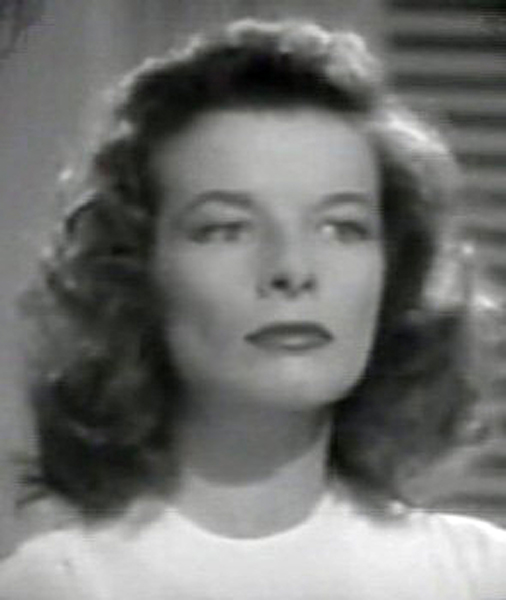
"Sometimes I wonder if men and women really suit each other.  Perhaps they should live next door and just visit now and then."  --Katherine Hepburn

When a woman is perpetually single, into her thirties, she gains, or has thrust upon her, a good deal of appetite for her own way.  There's no slow lesson of compromise and consideration, only the independence that sometimes being lonely will reward.

This is not to say that such a woman cannot find her perfect partner at any age, but it suggests that when love enters after three decades, it can be harder to adjust to.

I was watching Mary, Queen of Scots with Katherine Hepburn last night, and it occurred to me how iconic she became not just as a strong modern woman, but also as an actress who portrayed women of powerful self-will.  One of the greatest roles she ever played may have been Eleanor of Aquitane, another indomitable female.

Those phrases are still a little uncomfortable, aren't they?  "Appetite for her own way." "Self-will."  "Indomitable."  Yet these are phrases that have historically connoted admirable strength and determination--in persons of either gender.

And so I return to the Hepburn quote above.  I love the off-the-cuff wit and elegance it displays--but also the radical rethinking of what romantic relationships are meant to be.  If "women of a certain age," like myself, are going to be won over to the side of domestic felicity, it's going to be a felicity on our own terms, where we don't have to share a bathroom