Monday, July 23, 2012

The Artist's Way: Week One

I'm sure that, even now, there are hundreds of other people doing The Artist's Way, a creative recovery self-help program.  It's such an attractive program, and the rewards it offers are tremendous.  Unblocking creativity is big business, perhaps rightly so.

For personal reasons, I've begun using The Artist's Way to help me be more creative.  I find the system very intuitive; lots of writing, lots of reflection, concrete tasks to help me focus.  The core discipline of the program is writing three pages a morning by hand every single day.  You are also supposed to schedule time for weekly "Artist Dates" to spend time nurturing your creative self.

So for this first week, I agonized, plotted and planned over where to take myself, and finally wound up enforcing an evening of beauty maintenance on myself.  I'm fairly certain that's not a very good date, but it was nice and relaxing structuring a whole evening around self-care.

There are times when the tone of the book, the countless inspirational stories and affirmations, maddens me.  Affirmations are one of those things that I consider harmless lunacy, except that apparently they're supposed to work.  Maybe.  Being told to read and write affirmations feels pointless, but I'm doing it anyway, as much as I can. 

I'll check back next week to let you know how the process is going!

Tuesday, July 17, 2012

Modern Luxury

I spent five days of last week in a small shack in the woods near Prescott, Arizona, helping my mother cater a retreat for a group that comes there every year.  This is all very well and good, but Prescott, while a good deal cooler than Phoenix to the south, can be very warm indeed. 

Luckily, we had the technology to solve this problem: a small, thirty-year-old swamp cooler parked right in front of the bed.  I spent off time between meals lying in front of that little gust of cool air and drinking a Dr. Pepper from the refrigerator and musing that, just because of this simple luxury that I take for granted every day, I am enjoying greater luxury than Greta Garbo or Dolly Madison or Beau Brummel or Cleopatra. 

Everyone always wants to pin down the one invention that changed America--well let me tell you, my nomination is most certainly the air conditioner.  Air conditioning built the enormous Southwestern suburban cities, making deserts or swamps into livable places.

Computers may hold all our media, most of our social connections, and perform other amazing functions, but in my neck of the woods, if you asked someone what they can't live without, it's their air conditioning.

It all made me think of a favorite Marilyn Monroe comedy, The Seven Year Itch.  I'm sure most of you have seen it.  But has it ever occurred to you that, if you take Monroe's character as a desiring creature rather than merely an object of desire, the whole thing is a long, dirty love letter to air-conditioning?

Other inventions that changed our lives so dramatically we didn't even notice: the refrigerator, efficient lightbulbs, and food-canning technology.  These small things shape our lives more subtly, but ultimately more drastically, than all the silicone chips we like to bury ourselves in.

Thursday, July 5, 2012

Status, Cars, and the Hedonic Treadmill


I was planning to compose a post for today in response to the whole “Busy Trap” flutter going around the chattersphere. I will still try and write that post, because the issue is interesting to me, but a discussion with a friend on striving for status made me realize something strange.

First of all, there are a lot of ways to define status. A house, a job title, a judicial appointment, a fair wage. But if someone says, “Status is very important to me,” most of us assume that that person is a big jerk. That they want to lord it over the little people and maybe run over a few peasants on their way to and from the gourmet grocery store.

But if, say, a high school English teacher said to me, “I want more status,” I would immediately agree that they deserve more status. Because part of status is respect. And if teachers want to not be viewed as idiots who couldn't hack corporate law, then that seems like a fair demand to me.

What I really want to talk about, though, is cars. Cars have a unique association with status for many people. If we envision someone consumed by the desire for status, we generally assume they drive an overpriced car.

Here's the thing. My car gives me a sense of status. I drive a 2001 VW Beetle, and I love that machine like a child. Looking at its vivid blue color makes me smile. Children and old men yell, “Nice bug!” at me, and I grin at them and say thanks. It makes my day. My car is basically a reflection of my aspirational personality. It's quirky and cute, but it is still a “Volkswagen” as the Germans originally conceived it. A car for the people.

Interestingly, I can only think of a few cars that people react to this way. People at the convenience store don't yell, “Nice Beemer!” even though BMW does undoubtedly design lovely vehicles. In fact, other than the Beetle, the only other car I know of that elicits that reaction is the Fiat. The Fiat, like the Beetle, is basically unusual in that it is an example of good, even iconic, product design for the masses.

And therein lies the real attraction of these cars and why, in my case anyway, they are completely exempt from the hedonic treadmill that demands we constantly acquire more and better stuff. I have had my Beetle for five years now, almost. I have never once in that time wished for a better car. (Well, I've often wished for a car whose “check engine” light wasn't permanently on, but that's a different question). The pleasure I got that first day on the lot is the same as the pleasure I get every time I see the car in the driveway. If I could afford a brand new Mercedes-Benz, I would buy a brand new Beetle instead and then laugh my way to the bank. Because the Beetle isn't just another car. It's my car. It's the car that I want.

That's what breaks the hedonic treadmill. Not a resolve to live in austerity, but taking the time to find objects that are exactly what you want. Not a cheap substitute for what you want, not just a means of displaying wealth, but an end in and of themselves.

What objects do you have that never lose favor? Jeans that fit just right, a can opener that works perfectly, a beautiful painting?


Sunday, May 27, 2012

Preparation

It is truly stupid how many times I am taken aback by the simple fact that planning is a good thing.

I'm not talking your refinancing your mortgage or doing over your bathroom.  I'm talking simple, everyday stuff.  Slipping herbs into the water pitcher, packing homemade lemonade and some edamame for a long drive down to Phoenix, always remembering to keep lotion and lip balm by your bed.

These are the things that make a day work.  These are the things that prevent fast-food stops, bottled water purchases, late fees, headaches from happening.  These are the tiny doable actions that will make life run smoothly.  More than that, they're the best way to plan change into your life.  A menu plan and grocery list will do more to get that ayurvedic diet started than reading through a bunch of magazine articles and books about your dosha. 

Go do one tiny thing that will pay off later now!

Wednesday, May 23, 2012

The Old Genre Fiction Puzzler


“Somewhere in its history,” Lev Grossman writes, “reading novels has gotten all tangled up with questions of social status, and accepting the kinds of pleasure that genre novels offer us has become — how perverse are we? — a source of shame” ( http://entertainment.time.com/2012/05/23/genre-fiction-is-disruptive-technology/ ). He produces this “gem” in the middle of an essay on the ways in which genre fiction acts disruptively towards modern literary fiction. And while what Grossman says is undeniably true, it also demonstrates a really frightening ignorance towards the origins of the novel.

“Somewhere in its history?” Try always. Try the prose romances written by women in the seventeenth century that were obviously not literature because they weren't poetry. Try Daniel Defoe and his uneasy relationship with “real-life” crime literature. Try Samuel Richardson and Henry Fielding sniping at one another about what, exactly, the novel was supposed to be.

It's this last that's particularly instructive. Both Richardson and Fielding were invested in inventing “the modern novel,” despite the fact that neither of them really did so. Richardson's novels were morally sententious, painfully realistic (to the degree that Pamela can be considered realistic, which is certainly arguable), and (sorry) boring. So really, if Grossman wants someone to point his finger at for the way we think of literary fiction: serious, stylistically ambitious, and coded with a kind of moral valence, it's Richardson who deserves to take the brunt of that blame.

Fielding, on the other hand, wrote in a tradition that was much closer to the romances that were the novel's true origins. His work had a picaresque, postmodernist quality. Nonetheless, casting him as a kind of anti-hero of the novel's development is stupid. He was just as invested as Richardson in making himself the “father of the novel” (which had so many forgotten mothers...), and therefore in codifying literary genre.

What does this mean for the novel today? It means that we are still doing what we always do. We always want to ask ourselves, “But is it art?” Maybe that's not a bad question. Grossman lists authors like Neil Gaiman, China Mieville, and Catherynne Valente to demonstrate that art abounds in the genre fiction ghetto. And I'm not inclined to disagree. Novels like American Gods or Deathless are art, whether they are slapped with a genre fiction label or not.

But I do see a difference between literary and genre fiction. Practically, there's a difference in the ways these things are produced and sold. There's no MFA mill for genre fiction writers, which means that their understanding of conventions and the creative process is distinctively different from that of literary fiction writers.

For the reader, however, I believe the main distinction is one of investment. A reader who picks up a mystery, a sci fi romp, a romance, has different expectations than a reader of literary fiction. They aren't preparing themselves to seriously engage with the prose in order to appreciate it, they're preparing for the payoff. If the payoff takes too long, they put the book down.

And literary fiction could absolutely benefit from a stronger “philosophy of the payoff.” Too many modern writers seem to feel they need to beat the audience with sticks and leave them bleeding in order to demonstrate their “seriousness.” But there's still a value to something that makes readers sit down and suspend their desire for immediate gratification and comprehension. There's value to a novel that demands study.*

And, finally, I think that Grossman's article demands a greater transparency. The reader has a right to ask whether he is responding to the reception of his literary works, which could perhaps best be classified as fantasy fiction, and demanding a larger share of the “art” pie. Merely excising the personal from the critical does not in itself equate distance. Grossman should be open and honest about what the stakes are here for him personally.


*Please don't point me towards the Tolkien scholars. The fact that a thing can be studied does not mean it needs to be studied.


Friday, May 11, 2012

Why I Will Never Be Cool

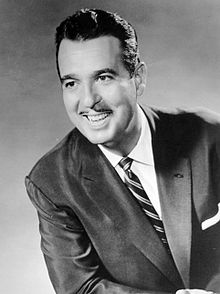
Tennessee Ernie Ford

I was not a popular child. That's the only real explanation I can come up with for my musical tastes. I liked Madonna as a child, and Oingo Boingo, but by fifth grade I didn't even know which New Kid on the Block was which. In junior high, I pretended to like Boyz 2 Men, but realistically, I spent most of my time at home, where my mother's boyfriend was playing his Johnny Horton records.

Thus an unusual ear was formed. Most popular music slid right off it, but a song like Bobbie Gentry's “Ode to Billie Joe” had me mesmerized for days. The positive effect of this is that I can out-hipster the hipsters. I dug into the history of popular music with idiosyncratic and insatiable appetite. There's always something new out there to find, you just have to hear it at the right time. I listened to Tom Waits and Leonard Cohen and the fucking Carter family and Dylan and Joni Mitchell. But the list doesn't stop there. Because there's John Denver too, and Glenn Campbell and Conway Twitty and Vera Lynn and everybody you wouldn't be caught dead listening to.

This is why I will never be cool.

Coolness is primarily humanist in perspective, which is to say it has to do with canon-making. It's cool to like old music so long as it's not music your grandmother liked. She was never hip enough to dig Chuck Berry.

I don't care if my grandmother liked it. I don't care if nobody but my grandmother liked it. I will listen to blues, to funk, to country hits that they sell on tv, to folk rock, to novelty music. I will listen to Harry Chapin singing about the “wild man wizard” inside of him when he gets high. And not for the pleasure of being different, because I mainly hide these tastes like leprosy.

With all that said? Led Zeppelin still sucks. I guess it must be music for cool people.


Saturday, May 5, 2012

A Tale of Two Cooks

My mother is a very good cook.  In terms of technical know-how and reliability, her cooking expertise far exceeds my own.  On her watch, everything gets cooked correctly.

So why do I hate her cooking?  The answer is simple: style and preparation.  My mother primarily relies on the same recipes she's been using for thirty years.  Do you remember what American cuisine was like thirty years ago?  That was the era when frozen vegetables were "fancy" for most people, and fresh vegetables virtually unheard of.  The majority of her meals involve an enormous slab of meat.

Personally, I am not a good cook.  I'm terrible at frying things.  I'm an indifferent baker.  Yet I like my own cooking better than anyone else's, and the reasons are the same I cited above: style and preparation.  I like to peruse recipes for inspiration.  A lot of my specialties are very simple and simply cooked foods that, in combination, become something more.  Example:  One of my favorite breakfasts involves sliced Spanish chorizo, chickpeas, tomatoes, and torn parsley all tossed together in a skillet.  It's an idiot proof dish--anyone with minimal cooking skills could prepare it.  But the dish itself has a taste that's to die for.

My point here is not that technical skill in the kitchen isn't important!  And with practice and attention to detail, anyone can overcome natural deficiencies in skill.  My point is, rather, that taking the time to assemble a meal--with main dish and sides that harmonize or a fantastically pulled-together single dish--can work wonders, and you don't have to have a lot of skill to do it.

So experiment.  Find out what foods go together, what you like, and don't be afraid to take things to the next level with a dash of freshly grated cheese, green herbs, or chopped nuts.  Little things like that have a big impact on a meal, and they're delightfully easy.